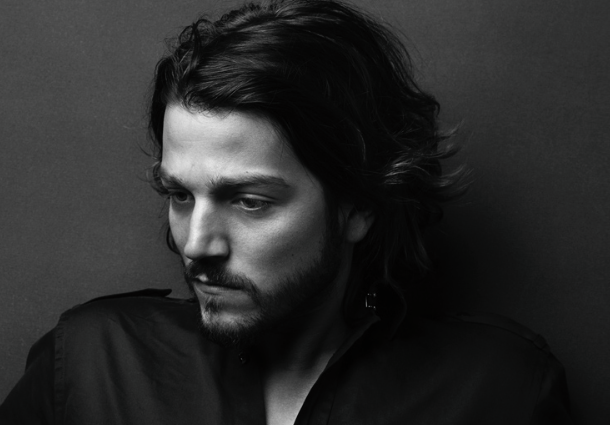
Ion de Sosa’s latest film could be going global soon.
International film sales agency MoreThan Films has picked up sales rights to the Spanish director/cinematographer’s Balearic ahead of its world premiere as part of the Filmmakers of the Present section at the Locarno Film Festival (August 6-16).
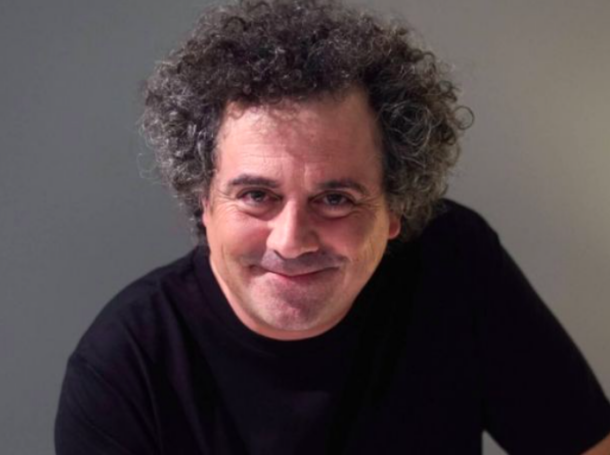 Balearic begins with a group of teenagers on a Mediterranean island who stumble upon a big house with a pool and decide to take an illicit dip that takes a much darker turn once three large dogs come to guard the property. From there, Sosa moves the story a few miles away to follow a group of wealthy neighbors gathered at a luxurious villa to celebrate the start of summer and St. John’s Eve. While all this happens, a wildfire breaks nearby, inching slowly towards the celebrations as techno music blasts in the background.
Sosa is a director and cinematographer whose previous films have premiered at prestigious festivals such as Berlin (Androids Dream) and San Sebastian (Mamántula).
As a cinematographer, Ion de Sosa has worked on films such as Aliens by Luis López Carrasco and The Sacred Spirit by Chema García Ibarra.
Balearic stars an ensemble cast including Luka Peros (Money Heist), veteran Spanish singer Christina Rosenvinge, Manolo Marín (Love, Hate, and Death) and Zorion Eguileor (The Platform).
Speaking with Variety ahead of Locarno, Sosa recalls the first seeds for the project coinciding with his turning 40 and entering a “sort of midlife crisis.”
“I began looking at how young and older people communicate and also at myself critically and wondering what I was doing, if any, to make the world a better place.”
“I started with the idea of young people trapped in a swimming pool and the three dogs as Greek symbols of what they had to overcome as a generation: exploitation at work, environmental disaster and the loss of liberties,” he adds. “But I didn’t want it to be a survival movie, I wanted to have a split in the film where I asked myself where the adults were, and the answer was at a party.”
Once de Sosa had that split between the young and the older, he began looking at influences such as John Huston and David Hockney’s classic The Swimmer. “I felt there was an interesting mixture of atmospheres to explore and I liked the idea of making two parallel worlds that could touch across the water but had no other relation.”
Although the film is named after the Spanish archipelago in the western Mediterranean Sea, de Sosa wanted the story to take place on an imagined island, and shot most of the film in Valencia due to funding streams and ease of logistics.
“An island allows you to create a small ecosystem and situations that can only happen in that place. Balearic, in the film, is an invented island, a small universe in itself,” he says.
“We don’t see the sea,” points out the director. “Everyone is talking about it, but we don’t see it. It’s maybe a little bit about getting yourself lost in your privilege and forgetting about the whole world outside of that. I like this idea of enjoyment from the point of view of privilege while also looking at new generations and their focus on self-enjoyment.”
In this, de Sosa was clearly inspired by the work of acclaimed Swedish filmmaker Ruben Östlund, especially Triangle of Sadness, but the director also highlights Jonathan Glazer’s Oscar-winning The Zone of Interest as a guiding point of reference for the “masterful” way it toes the line between two starkly different worlds that exist as neighbors.
For “Balearic,” de Sosa worked with several new collaborators, including creatives who had not worked on a feature film before. Amongst those, the director highlights cinematographer Cris Neira — who worked in Cinemascope inspired by the work of Sergio Leone — and young musician Xenia, who wrote the film’s throbbing techno score after being approached by the director. “Xenia understood from the beginning what I wanted from the music in the film,” added de Sosa, highlighting the tightness of the beating music juxtaposed against the vastness of the cinematography.
Queralt Pons Serra, managing partner at MoreThan Films, tells Variety they are “thrilled” to acquire Balearic, calling it a film that “immediately stood out for its fearless approach to genre, sharp social criticism and distinctive visual style.”
“Ion de Sosa continues to prove himself one of the most daring and original voices in contemporary cinema, and we have long been admirers of his work,” she adds. “With ‘Balearic’, he offers us a hypnotic and unsettling vision that captures with humor and uncanny precision the tensions of a sun-drenched paradise. A thought-provoking film with a strong ambition to connect both sensorially and emotionally, depicting the unique and singular setting of the Balearic Islands, where historically a diverse mix of people has given rise to very distinctive situations. We are honored to support this unique film and help bring it to the audience it deserves worldwide.”
Balearic is produced by Umbracle Cine, Apellaniz y de Sosa and Jaibo Films in co-production with La Fabrica Nocturna Cinéma. MoreThan Films is an international film sales agency based between Barcelona, Berlin and São Paulo.